Interactive CAD review · V3

Smart Passive Dehumidifier

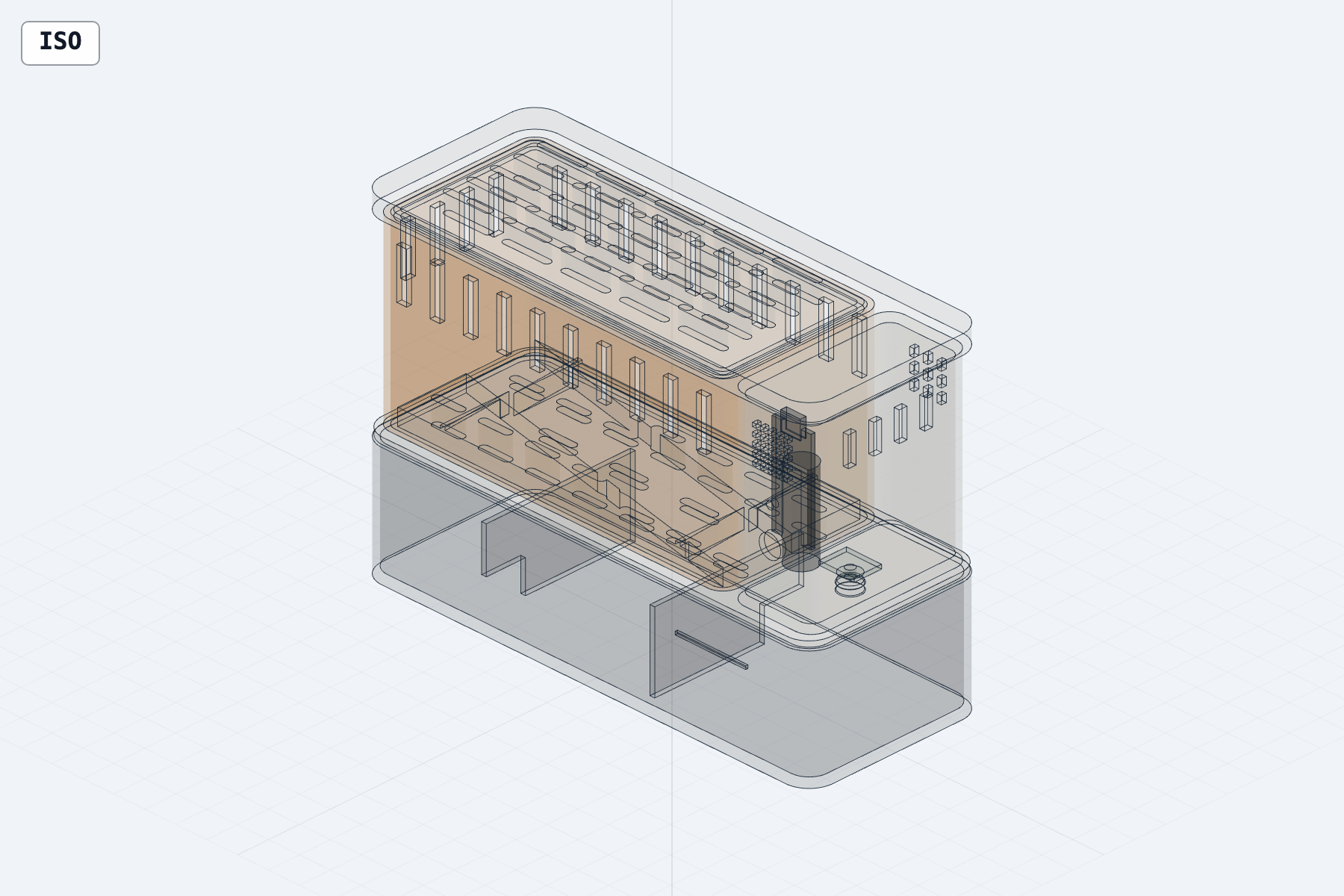
Passive, refillable and monitored. Drag to rotate, scroll to zoom, or use the downloadable manufacturing files.

Prototype technical specification

Proposed V1 electronics and firmware architecture. Component choices are manufacturer-backed; battery life and optical liquid sensing remain physical-prototype validation items.

Proposed V1 component Bench validation required

Control + connectivity

ESP32-C3-MINI-1

Compact controller for periodic sensing, provisioning and cloud sync.

  • 2.4 GHz Wi-Fi + Bluetooth 5 LE
  • BLE provisioning, Wi-Fi reporting
  • Deep sleep between readings
  • I²C bus for both sensors

Espressif module specification ↗

Ambient sensing

Sensirion SHT40

Prefer the membrane-protected SHT40-AD1P variant for the humid operating environment.

  • Typical humidity accuracy: ±1.8% RH
  • Typical temperature accuracy: ±0.2°C
  • 0–100% RH operating range
  • Dedicated cupboard-air vent, isolated from CaCl₂

Sensirion sensor specification ↗

Liquid level · validate

ST VL53L4CD ToF

Downward distance measurement through a sealed IR-transparent window—no sensor or wiring touches brine.

  • Specified short-range operation: 1–1200 mm
  • 18° field of view
  • CAD target: approximately 20–100 mm
  • Clear tank zone beneath sensor; no baffle or drain stream

ST sensor specification ↗

Power + firmware

Designed around intermittent measurements

  • Battery: rechargeable 1-cell Li-ion/LiPo, 1500–2500 mAh prototype target
  • Charging: USB-C 5 V input with single-cell charge and protection circuit
  • Local UI: one RGB status LED and one pairing/reset button; no display for V1
  • RH/temperature: sample every 5–15 minutes
  • Liquid level: sample every 15–60 minutes
  • Cloud sync: every 30–60 minutes, with an immediate upload for warnings

ESP32-C3 sleep-mode documentation ↗

Calibration · validate

Tank level mapping

Record the empty-tank and MAX-line distances, then map each measurement to a clamped 0–100% value.

level % = (D_empty − D_current)
─────────────── × 100
(D_empty − D_full)

Window material, thickness, condensation and CaCl₂ brine reflectance must be tested. Cover windows introduce optical crosstalk and require calibration.

ST cover-window guidance ↗

First working prototype

Development-board BOM

Validate sensing and enclosure geometry before investing in a custom PCB.

  • ESP32-C3 development board
  • SHT40 breakout
  • VL53L4CD breakout
  • ~2000 mAh LiPo
  • USB-C charging board
  • RGB LED + button

Mechanical targets

Prototype capacities

  • CaCl₂: approximately 0.75–1.0 kg
  • Usable brine tank: approximately 0.8–1.2 L
  • MAX line below physical capacity for spill headroom
  • Top lid and bottom tank are the only detachable parts

Capacity targets remain provisional until chamber and tank volumes are measured from the printed prototype.

Design inspection

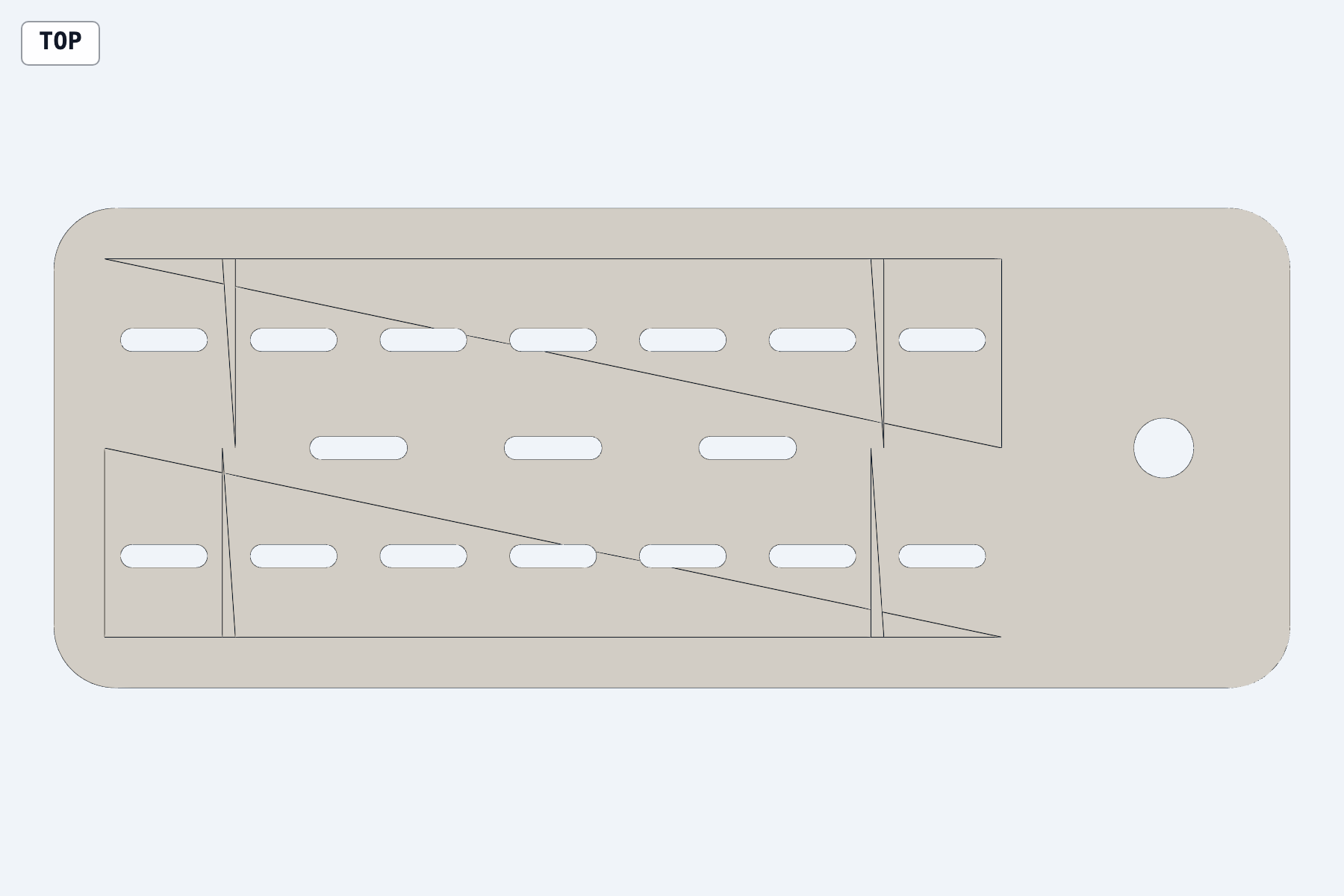
The assembled enclosure and the simplified drainage tray.